

SDV Insider - May 29, 2026
Welcome back to SDV Insider.
The unofficial start of summer arrived with the curtain going up on the autonomous-vehicle business. For years the AV industry has scaled based on inferred assumptions of fleet sizes and deployment depths. A single Texas law now turns this inference into public record this week, and the resulting filing redrew the competitive map in one document. Waymo at 577 vehicles, Tesla at 42 and freight-AV operators newly visible.
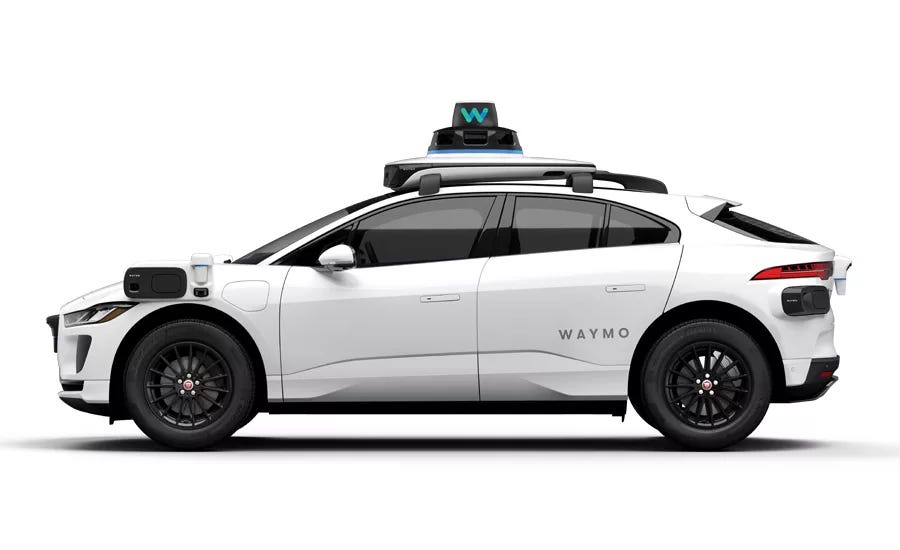
Across the rest of the week, the underlying SDV stack kept consolidating. Stellantis committed its next-generation vehicles to Qualcomm’s Snapdragon Digital Chassis - including, in a quiet kicker, an LOI for Stellantis-owned aiMotive to join Qualcomm Technologies. Hesai locked in a second top-tier European OEM in eight days, this time with a million-unit ATX LiDAR order. Waymo put its first purpose-built robotaxi on the road, Pony.ai raised its 2026 fleet target on a quintupled robotaxi revenue line, and Astemo and Hitachi unveiled a joint Driver-Assistance AI platform aimed at making SDV AI development reproducible.
The signal this week: the SDV stack is getting more transparent, more stacks consolidated (Stellantis → Qualcomm), and more dependent on a few Chinese suppliers for the parts the West isn’t yet making at scale (Hesai). All three trends are pulling forward harder than the public narrative has caught up to. Let’s get into it.

🚀 Top Story
Texas SB 2807 Takes Effect - and the AV Industry’s Competitive Map Becomes Public Record
On May 28, Texas Senate Bill 2807 took effect, requiring any company running a commercial driverless passenger or freight service on Texas roads to hold an active authorization with the state and disclose how many autonomous vehicles it operates. To get authorized, operators must self-certify that their vehicles meet SAE Level 4 standards, comply with state traffic laws, carry onboard recording devices, meet federal safety standards, and can reach a minimal-risk condition automatically if the system fails. The registration data went public the same day.
The filing itself is the story. Waymo leads Texas with 577 registered autonomous vehicles, followed by Avride at 317 and Nuro at 47. Tesla - which launched its Austin robotaxi service last summer and has talked up expansion into Dallas and Houston - registered just 42, less than one-tenth of Waymo’s fleet. Amazon’s Zoox sits at 35; Volkswagen’s MOIA at 12. Tesla self-certified its Model Y robotaxis as Level 4 to clear the bar - a mechanism that, by design, requires no independent validation.
The quieter third layer is freight. Aurora, Kodiak, Stack AV, May Mobility and Bot Auto all show up in the authorization pipeline, making their commercial L4 footprints visible at a granularity press announcements never offered. The opacity that surrounded autonomous trucking is breaking down state by state - and Texas is the template.
The contrast inside Tesla’s own data is sharper still. According to tracker data published by Electrek on May 26, Tesla’s active unsupervised robotaxi fleet has shrunk to 20 vehicles across Austin, Dallas and Houston - down from 25 in late April. Total active fleet (including safety-driver-supervised vehicles) has cratered from 165 to about 34. The Bay Area supervised fleet alone collapsed from 107 vehicles in April to nine. Tesla self-certified L4 with the state the same week its actual on-road operations contracted.
Our Take: Self-certification is the lightest regulatory mechanism that can still be called regulation, and Texas just demonstrated both its strength and its limit in one week. The strength: a single statute converted the competitive landscape from rumor into a state-issued list, and freight AV is no longer invisible. The limit: a self-certified L4 claim is only as good as the honesty of the entity making it - and Tesla’s simultaneous L4 certification and shrinking fleet is the case study every other state legislature will study before writing their own version. Expect three things to follow: (1) other AV-active states (California, Arizona, Nevada, Pennsylvania) to copy the Texas disclosure model, (2) increased scrutiny of Tesla’s L4 certification claim from NHTSA and from civil plaintiffs in any future Texas robotaxi incident, and (3) freight AV operators to start showing up in analyst models they were previously absent from. For SDV platform teams: the regulatory and data-disclosure layer is no longer something to bolt on later. Build it into the stack now.
⚙️ Industry Pulse
Hyundai Recalls 421,078 Vehicles Over a Forward-Collision Software Error
NHTSA disclosed on May 22 that Hyundai is recalling 421,078 US vehicles - certain 2025-2026 Santa Cruz and Tucson variants - after a software error in the front cameras can cause the forward collision-avoidance system to brake prematurely, with 376 reports and four crashes logged. The fix is a dealer-applied front-camera software update rather than an over-the-air push, which is itself the point: as more vehicle behavior is defined in software, more recalls are software recalls, and the ones that still require a service-bay visit highlight exactly where OTA-capable architectures pay for themselves.

Elektrobit and ETAS Ship a Pre-Integrated ADAS Software Foundation at JSAE Yokohama
On May 27 at the JSAE Automotive Engineering Exposition in Yokohama (running through May 29), Elektrobit and ETAS launched a jointly pre-integrated ADAS software foundation pairing EB corbos Linux for Safety Applications with the ETAS Vehicle Software Platform Suite ADAS profile - delivering ASIL-B safety in a Linux-based environment alongside series-proven middleware. The pitch is that ADAS developers increasingly need both the openness of Linux and automotive-grade functional safety, and stitching those together at the OEM level has been burning months per program. A pre-integrated foundation collapses that work. It’s a small announcement with a big implication: the non-differentiating layers of the SDV stack are industrializing into things you buy, not things you build.
Pony.ai Raises 2026 Fleet Target to 3,500 on a 395% Robotaxi Revenue Surge
In its Q1 2026 results released May 26, Pony.ai reported total revenue of $34.3 million (+145% YoY) with robotaxi services revenue specifically up 395.4% YoY (fare-charging revenues up 456.5%). The company raised its year-end 2026 robotaxi fleet target from 3,000 units to over 3,500 units - up from a fleet currently exceeding 1,700 vehicles - and initiated robotaxi deployment in Croatia, marking the first commercial robotaxi service in Europe by a Chinese AV operator. Read alongside this week’s Texas reveal, the comparison is striking: Pony.ai’s deployed fleet is already meaningfully larger than Tesla’s authorized Texas count, with revenue scaling at a rate that makes Tesla’s contracting operations look like an even harder gap to close.
💼 Company Moves & Partnerships
Stellantis Commits Its Next-Gen Architecture to Qualcomm - and Signs an LOI to Hand Over aiMotive
On May 21, Stellantis and Qualcomm announced an expansion of their multi-year partnership that puts Snapdragon Digital Chassis SoCs across Stellantis’s next-generation vehicle architectures for cockpit, connectivity and ADAS, including the Snapdragon Ride Pilot ADAS platform for L2+ hands-free automated driving. The deal integrates Snapdragon Digital Chassis with STLA Brain, Stellantis’s software platform. The quiet kicker: Stellantis and Qualcomm have entered a non-binding letter of intent for aiMotive - Stellantis’s automated-driving and simulation subsidiary, whose ASIL-B-certified aiWare5 NPU IP launched just two weeks ago - to join Qualcomm Technologies. Stellantis is effectively divesting the ADAS-silicon IP company it acquired in 2022 and consolidating the entire driving stack under Qualcomm. For OEMs evaluating their own ADAS silicon roadmaps, the read is direct: when the largest non-Chinese OEM group bets its next-generation architecture on a single SoC supplier, the multi-SoC strategy gets harder to justify on cost.
Astemo and Hitachi Build an Open AI Development Platform for Driver-Assistance in SDVs
On May 20, Hitachi and Astemo announced they are jointly building an AI development platform for driver-assistance systems in software-defined vehicles, targeting operational readiness by the end of FY2026 (March 2027). Astemo contributes vehicle-integrated control and AI tech; Hitachi contributes digital-twin simulation, confidential-information protection, and physical-AI capabilities. The platform combines real-world driving data with synthetic data from digital-twin simulations to accelerate Driver-Assistance AI development and validation, with agentic AI automating parts of the workflow including test-item generation. The notable design choice: Astemo plans to make it an open platform usable by other automakers and suppliers, integrated with its IoV platform - betting that the next round of SDV AI development tooling will be more like a shared substrate than a proprietary moat.
📊 Market & Reports
Connected-Vehicle Technology Market Pegged at $45.3B, Headed to $129.2B by 2035
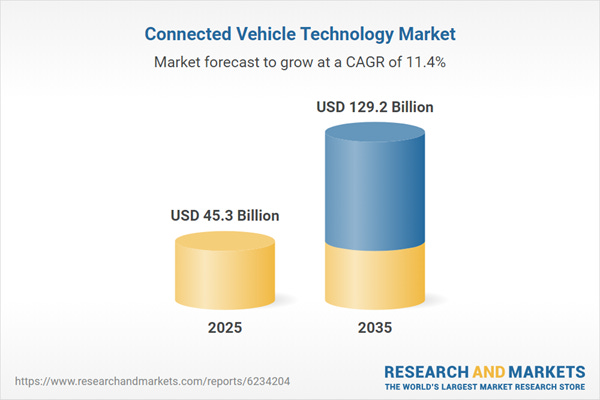
A market report released May 25 values the global connected-vehicle technology market at $45.3 billion in 2025 and projects it reaching $129.2 billion by 2035, an 11.4% CAGR, with ADAS integration cited as the primary growth driver. Treat the forecast figure with the usual caution applied to ten-year market models, but the directional read aligns with everything else this week: connectivity and driver-assistance software are where the spend is concentrating, and the connected layer is increasingly the substrate the rest of the SDV value stack sits on.
📅 Upcoming Events
Autonomous Vehicle Technology Expo Europe - Stuttgart
June 23–25, 2026. Conference tracks span SDV architecture, safe autonomous deployment, simulation and validation, and standards and regulation. With the Texas SB 2807 disclosure model fresh, the Stellantis–Qualcomm consolidation reshaping the SoC landscape, and the Elektrobit/ETAS foundation now shipping, Stuttgart will be the first major European venue to digest all three into architecture decisions for 2027 model-year programs.
👋 That’s a Wrap
This week’s signal: The week the AV business got publicly counted (in Texas to start) is also the week the platform layer underneath it got more consolidated, more software-defined, and more geographically polarized. The companies whose disclosed reality matches their marketed reality - in fleet size, in self-certification, in supply-chain origin - are the ones the next year will reward.
- The SDV Insider Crew 🚗💨