

SDV Insider - May 15, 2026
Welcome back to SDV Insider.
This week, the SDV platform wars moved deeper into the OS layer. OEMs aren’t just choosing software partners anymore - they’re choosing the foundational architecture their vehicles will run on for the next two decades. That’s a longer-cycle, higher-stakes decision than picking an infotainment vendor, and the industry is starting to treat it that way.
Meanwhile, the embedded compute stack keeps industrializing: safety-certified silicon, edge AI vision, and automotive-grade RTOS are all getting tighter integration. And a Waymo robotaxi swept into a Texas creek offered the clearest real-world illustration yet of what OTA-as-safety-infrastructure actually looks like in practice.
The signal this week: the foundation layer is being locked in. The OS and platform decisions being made now will be load-bearing for the next generation of SDVs - and the window to influence them is narrowing.
🚀 Top Story
Nissan Selects Red Hat as the OS Foundation for Its Next-Generation SDV Platform
Announced at Red Hat Summit in Atlanta, Nissan has selected Red Hat In-Vehicle Operating System as the Linux foundation for its Scalable Open Software Platform (SW PF) - the architecture that will power Nissan’s future software-defined vehicles. This isn’t a vendor relationship: Red Hat engineers are being embedded directly into Nissan’s software development pipeline, co-engineering the platform from the inside.
The strategic logic is explicit. Nissan’s vehicles have multi-decade lifecycles, and the SW PF needs an OS capable of sustaining software updates, feature evolution, and security patches across that entire span. By anchoring on Red Hat’s enterprise Linux foundation, Nissan gains a standardized, scalable base that decouples software development from hardware - enabling smartphone-style feature updates while maintaining automotive-grade safety and security. The platform will underpin Nissan’s next-generation Central Vehicle Computer.
Beyond the platform selection itself, the operating model deserves its own note: Red Hat engineers are being co-located within Nissan’s software development teams - not operating as a remote vendor. This embedded engineering model is increasingly how serious SDV platform partnerships get structured. It’s the difference between a software license and genuine platform co-ownership. Expect to see more OEM-supplier relationships structured this way as vehicle software complexity makes arm’s-length integration untenable.
This is a significant moment, not just for Nissan. The OS layer is where SDV platform control gets established - and it’s increasingly becoming a race between proprietary OEM stacks and enterprise Linux-backed foundations. Nissan is making a clear bet: own the software lifecycle, not just the vehicle. The decision to embed Red Hat engineers directly into the development pipeline signals genuine platform depth, not a typical vendor integration. For the broader industry, watch how other Japanese OEMs respond - Nissan’s SW PF choice could accelerate a similar shift toward open-source OS foundations across the region. The OEMs that get this layer right in 2026 will have a compounding advantage through the rest of the decade.
⚙️ Industry Pulse
Waymo Recalls 3,791 Robotaxis - and Fixes Them All Over the Air
On April 20, an unoccupied Waymo robotaxi in San Antonio encountered a flooded section of highway, slowed down - and then kept going. The vehicle was swept into Salado Creek and had to be recovered days later. Waymo filed a voluntary recall with NHTSA covering 3,791 vehicles (its entire 5th and 6th generation fleet) within ten days of the incident. The fix: an over-the-air software update, already deployed to 100% of affected vehicles before the recall even became public.
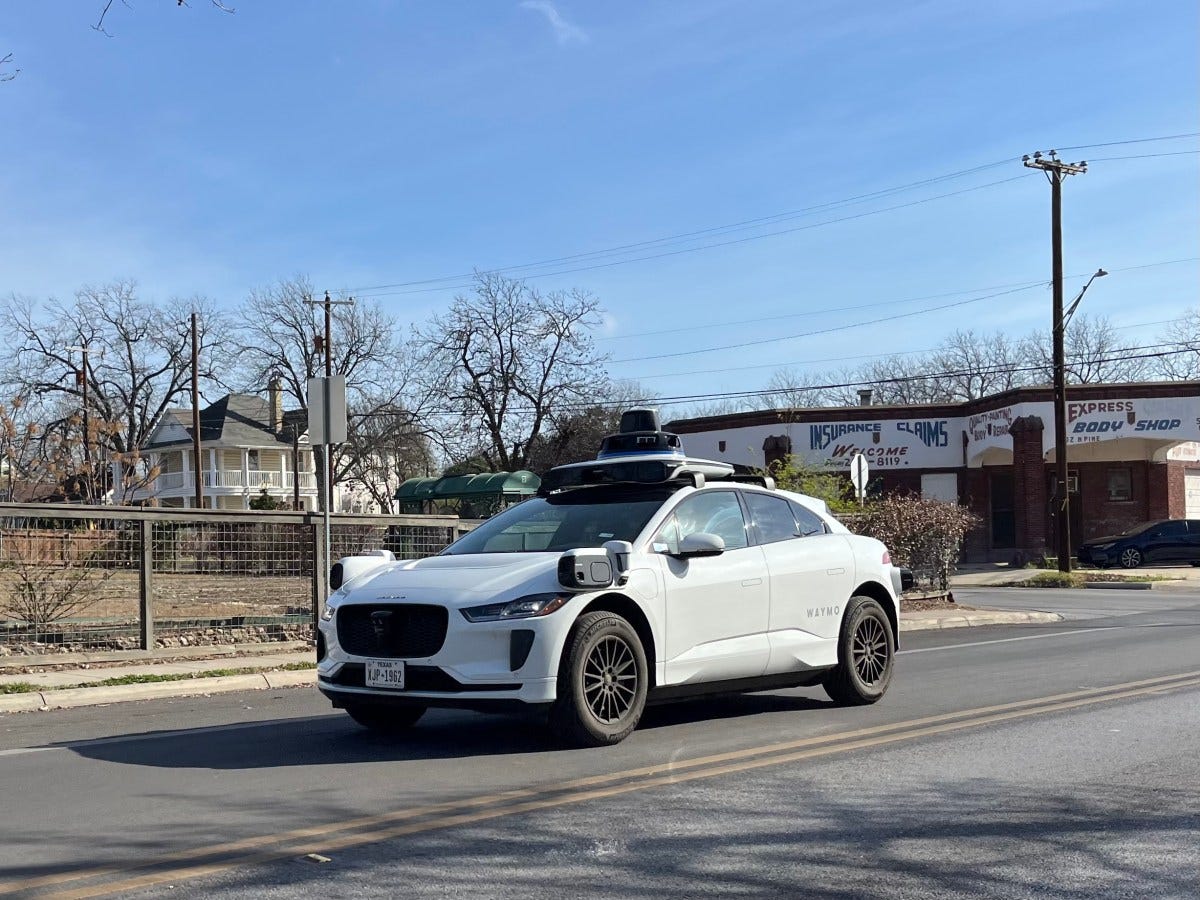
The root cause was a logic gap: the system correctly detected the hazard and reduced speed, but failed to execute a full stop or route-around on higher-speed roadways. Waymo has tightened operational parameters for extreme weather and updated map data to restrict access to flood-prone areas while the full software remedy is finalized. No passengers were on board in any of the incidents. This is Waymo’s second voluntary recall in the past year - a prior one covered school bus passing violations in Texas, also resolved via OTA.
The SDV angle here isn’t the recall - it’s the resolution model. Waymo identified a fleet-wide software defect, filed proactively with the regulator, and patched every affected vehicle remotely, with no customer action required, in under two weeks. That’s a fundamentally different safety infrastructure than traditional automotive recalls, where fix completion rates often languish in the 70–80% range for months. As AV fleets scale, OTA-as-safety-patch becomes a core capability, not a differentiator. The question for the broader industry: what’s your OTA completion rate when it counts?
Porsche Folds Car-IT into R&D - A Signal on SDV Org Design Under Pressure
Porsche AG is restructuring its Executive Board from eight to seven divisions, winding down its standalone Car-IT division and absorbing it into Research and Development effective July 1. Board Member Sajjad Khan - recruited specifically to lead Porsche’s software and digital strategy - will exit the Executive Board and transition to a software partnership advisory role. The move comes as Porsche navigates a 15% sales decline and a 22% drop in operating profit in Q1 2026, alongside broader job cuts and the shutdown of several subsidiaries.
Under Khan’s tenure, Porsche advanced its infotainment design language and rolled out the Porsche Digital Interaction system on the electric Cayenne. But the standalone software board seat, created with high-profile intent, is being folded back into traditional R&D under financial pressure. Dedicated software leadership structures at OEMs - separate boards, standalone divisions, Chief Digital Officers - were a defining trend of the early SDV era. When quarterly results turn south, these structures are among the first to get consolidated. The OEMs that will weather this are those that embedded software culture deeply enough that it survives the org chart changes.
Porsche's Car-IT consolidation isn't an isolated event. Across the industry, OEMs that created standalone software divisions or elevated digital leadership to the executive board during 2020–2023 are quietly restructuring those functions back into traditional engineering hierarchies. EV demand softness, China market weakness, and rising R&D costs are squeezing the organizational experiments of the early SDV era. The OEMs that emerge strongest will be those that embedded software culture deeply enough that it survives the restructuring - not those that treated it as a separate org chart box.
Renesas Acquires Irida Labs - Edge Vision AI Comes In-House
Renesas Electronics has completed the acquisition of Irida Labs, a Greek embedded software firm specializing in AI-powered visual perception systems. The deal brings Irida Labs’ PerCV.ai platform in-house, deepening Renesas’ edge AI stack for automotive in-cabin sensing, traffic monitoring, robotics, and industrial inspection. Irida Labs’ tools will be integrated into Renesas 365, the company’s cloud-based development platform. The two had previously collaborated as partners - bringing the capability in-house eliminates the seam between silicon and software, a pattern becoming standard as semiconductor suppliers race to deliver complete, integrated solutions rather than discrete components.
Green Hills + AMD Deliver ASIL D-Ready Embedded Stack for Automotive AI at the Edge
Green Hills Software has announced a combined hardware-software solution with AMD for the Versal AI Edge Series Gen 2 adaptive SoC, targeting safety- and security-critical embedded applications in automotive, aerospace, and robotics. The stack pairs Green Hills’ safety-certified RTOS, hypervisors, compilers, and development tools with AMD’s ASIL D / SIL 3-capable silicon - as a single-source solution across both Arm Cortex-A78AE and Cortex-R52 compute complexes. Tier 1 suppliers and OEMs can consolidate mixed-criticality ECU functions onto a single chip without sacrificing safety separation or certification integrity. Lead customers are already enabled on the evaluation kit. For teams building ADAS, sensor fusion, or domain controller applications that need both AI performance and functional safety compliance, this is a production-ready foundation worth evaluating.
📅 Upcoming Events
Automotive Software Strategies - Munich
May 19–20, 2026
A focused gathering for engineering and product leaders navigating SDV architecture decisions. Relevant backdrop given this week’s OS platform and embedded stack news.
👋 That’s a Wrap
This week’s signal is clear:
The OS and platform layer is where the next decade of SDV competitive advantage gets established - and OEMs are making those bets now
OTA isn’t just a feature delivery mechanism - Waymo just demonstrated it’s a safety infrastructure, capable of patching an entire fleet before a recall even goes public
Organizational commitment to software transformation is fragile - the OEMs building software into their engineering DNA will outlast those that built it into their org charts
The foundation layer is being poured. What gets built on top of it will define the SDV winners of the 2030s.
- The SDV Insider Crew 🚗💨