

SDV Insider - May 8, 2026
Welcome back to SDV Insider. Happy Mother's Day to all the moms in the SDV community - the only people who can manage a household and a software release cycle at the same time.

This week, software-defined momentum cuts across both passenger and commercial vehicles - and the throughlines are familiar: AI delivery via OTA, autonomy moving from pilots to real logistics operations, and a geopolitical environment that’s forcing supply chain reckoning.
ACT Expo 2026 just wrapped in Las Vegas, and the commercial vehicle space delivered a few stories too relevant to ignore - so we've woven the best of them in below.
The signal this week: the stack is shipping. Whether it’s Gemini arriving in four million cars or an autonomous Volvo VNL hauling freight into a customer dock in Oklahoma City - real deployments are outpacing the press releases.
🚀 Top Story
Volvo + Aurora Take Autonomous Trucking End-to-End
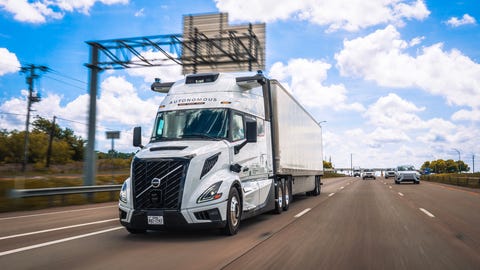
At ACT Expo in Las Vegas this week, Volvo Autonomous Solutions (V.A.S.) and Aurora Innovation announced a significant operational milestone: their autonomous freight network has expanded to a new 200-mile route between Dallas and Oklahoma City - and for the first time, the Volvo VNL Autonomous is delivering directly into customer facilities, not just freight hubs.
That last part matters. Hub-to-hub autonomous hauls have become table stakes. Terminating at a customer’s dock - requiring deeper scheduling integration, operational precision, and coordination with live logistics flows - is a different challenge entirely. V.A.S. is running this lane five days a week under supervised autonomy, with the Aurora Driver handling the interstate haul.
This is also Volvo’s third autonomous lane and its first cross-state operation. Aurora mapped the route and launched hauls within weeks. Volvo plans to build hundreds of VNL Autonomous trucks in 2027, and both companies say they’re in final validation for fully driverless operations.
Our Take: The Volvo + Aurora story is no longer about proving the technology - it’s about proving the operating model. Moving freight end-to-end into a real customer facility is the bridge from demo to commercial service. For the SDV stack, this validates something important: the fleet management system, the virtual driver, the uptime infrastructure, and the logistics integration all have to work as one platform - not as discrete components. That’s an SDV thesis, not just an AV thesis. Watch 2027 closely: if Volvo ships hundreds of these trucks, the economics of autonomous freight start to compound fast.
⚙️ Industry Pulse
Hyundai Launches “Pleos Connect” - LLM-Powered Infotainment at Scale
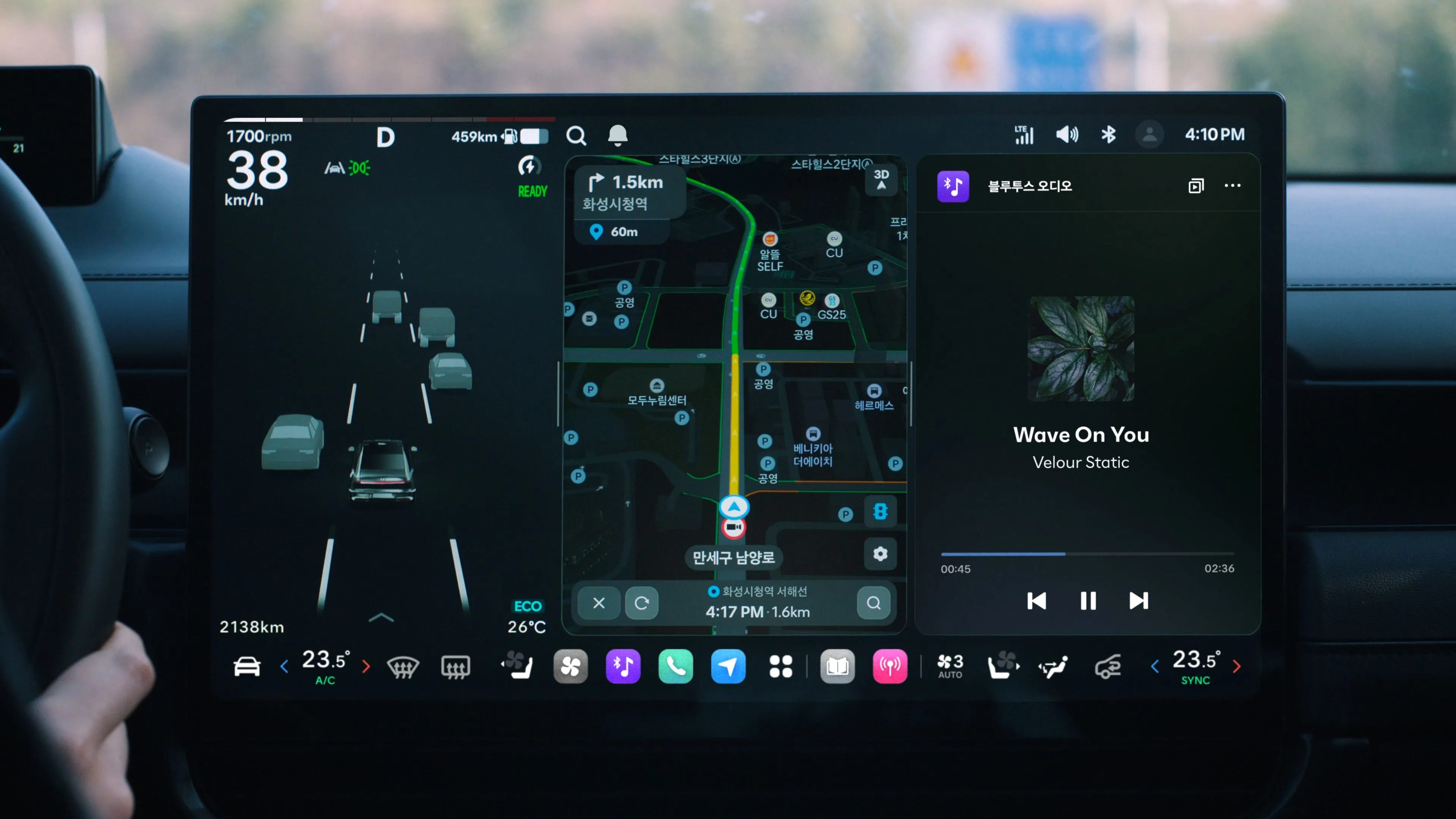
Hyundai Motor Group has officially unveiled its mass-production SDV strategy with the next-generation “Pleos Connect” in-vehicle infotainment system. The platform features “Gleo AI,” an LLM-based voice assistant, and an integrated App Market - debuting this month in South Korea on the GRANDEUR. The play here is clear: smartphone-like personalization, continuously updated via software, with a growing third-party app ecosystem as the long-term moat. Hyundai is betting that the platform layer - not the hardware - becomes its primary differentiator against both legacy OEMs and tech-first entrants.
Google Gemini Goes OTA to Four Million Vehicles
General Motors is pushing Google Gemini AI to roughly four million vehicles via over-the-air updates, replacing Google Assistant with a more capable natural-language system. Polestar and Volvo Cars are making the same move across their EV lineups. The industry has settled on a pattern: meaningful AI upgrades delivered post-purchase, remotely, at scale. OTA is no longer just a patch mechanism - it’s the primary feature delivery channel.
Zeem Hits 350,000 Charging Sessions at LAX - and the Data Is the Story [ACT Expo]
Zeem Solutions announced at ACT Expo that its Los Angeles International Airport depot has surpassed 350,000 cumulative commercial EV charging sessions since 2021 - dispensing an estimated 13.4 million kWh to a mix of rental, ride-hail, and medium/heavy-duty fleets. More interesting than the milestone is what Zeem has learned: predictability is the product. Every session is contracted and scheduled in advance, which has allowed the company to maintain 98% charging uptime - a metric that matters enormously for commercial fleet operators who can’t afford surprise downtime. Zeem is now bringing its depot model to customer fleet yards with a palletized charging solution. Five years of operational data at scale is a serious competitive asset.
Elektrobit Launches World’s First ASIL-B Compliant Open-Source Linux OS
Elektrobit has announced EB corbos Linux for Safety Applications, claiming it as the first open-source OS solution assessed to ASIL-B compliance. This is a meaningful unlock for the broader SDV ecosystem: open-source foundations for safety-critical vehicle systems have long been constrained by certification gaps. Clearing ASIL-B opens the door to wider adoption of Linux-based platforms across domains where functional safety is non-negotiable.
Senate Bill Targets Chinese Connected Vehicles
Bipartisan legislation - the “Connected Vehicle Security Act of 2026” - has been introduced in the U.S. Senate to ban the import, sale, and operation of connected vehicles manufactured in China, Russia, North Korea, and Iran. The national security rationale centers on data exposure and potential remote access risks embedded in foreign vehicle software. This is no longer a theoretical regulatory risk - it’s an active legislative push that will reshape sourcing decisions, certification requirements, and market access strategies across the connected vehicle supply chain.
💼 Company Moves & Partnerships
KPIT Acquires Cymotive for Up to $120M - Cybersecurity Gets Serious
Indian automotive software specialist KPIT Technologies is acquiring Israeli cybersecurity firm Cymotive Technologies for up to $120 million. Cymotive, co-founded by former Israeli intelligence leaders alongside Volkswagen’s CARIAD, specializes in SDV cybersecurity systems. For KPIT, this is a direct capability play in one of the fastest-growing and highest-margin segments of the automotive software stack. As SDVs expand their attack surface - more connectivity, more OTA, more third-party integrations - embedded cybersecurity expertise becomes a core engineering asset, not a compliance checkbox.
Geotab Integrates Polestar into OEM Telematics Network
Geotab has added Polestar to its OEM telematics network, giving global fleets near real-time access to EV battery, charging, and location data through MyGeotab - no aftermarket hardware required. This is the telematics model that wins: factory-native data piped directly into fleet management platforms, clean and reliable from day one. Expect the OEM telematics network model to become the default as EV adoption accelerates and fleets demand richer data without installation overhead.
Penske Deploys Kalmar T2 EV Terminal Tractor - First Leasing Company to Do So [ACT Expo]
Penske Truck Leasing became the first truck leasing company to integrate the Kalmar T2 EV electric terminal tractor into its fleet offerings, announced at ACT Expo. Yard trucks are often cited as the lowest-friction entry point for heavy-duty fleet electrification - fixed routes, predictable duty cycles, depot charging. The leasing model lowers the adoption barrier further. Not a pure SDV story, but a meaningful signal that commercial fleet electrification is moving from operator-owned pilots into mainstream leasing infrastructure.
International Debuts “My International” Connected Fleet Platform
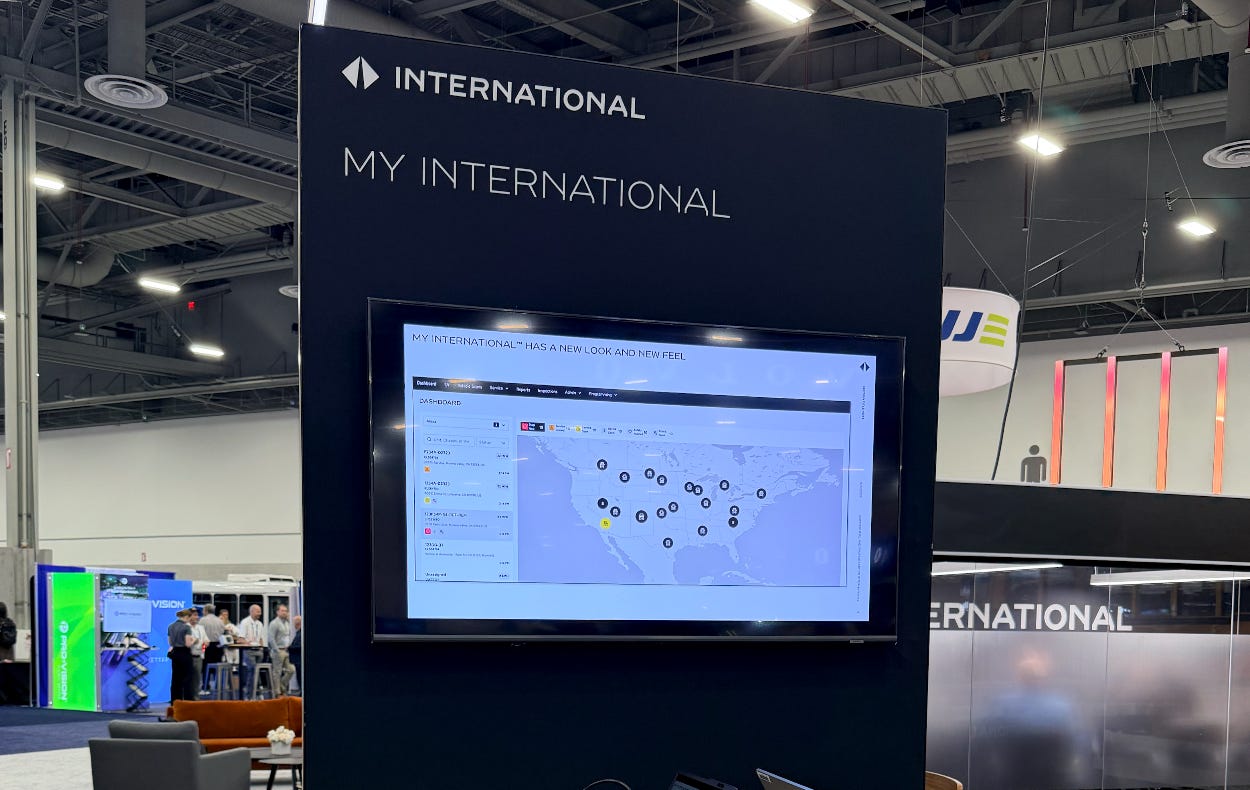
International has launched “My International,” a connected platform centralizing fleet telematics, diagnostics, maintenance scheduling, and dealer communication into a single interface. The commercial vehicle sector is moving fast on platform integration - and heavy-duty truck fleets, with their extreme uptime sensitivity, are proving to be a compelling early market for unified fleet software. Reducing downtime through connected data isn’t a nice-to-have in trucking; it’s the core value proposition.
📊 Market & Reports
Moody’s: SDVs Are Straining Supply Chains
A new Moody’s analysis flags that the rise of software-defined vehicles is increasing pressure on automotive supply chains - through higher input costs, semiconductor complexity, and expanded cybersecurity exposure. The implication for OEMs and Tier 1s: the SDV transition isn’t just an engineering challenge, it’s a risk management challenge. Closer supplier collaboration, cleaner software procurement practices, and embedded security are no longer optional for supply chain resilience.
📅 Upcoming Events
Enhanced Safety of Vehicles (ESV) Conference - Toronto
May 12–15, 2026
Global safety and regulatory leaders convene as SDVs and autonomy reshape vehicle risk models. A key forum for understanding where safety standards are heading - and what that means for software validation requirements.
SEMA Garage Cybersecurity Workshop - Detroit
May 21, 2026
DG Technologies President Mark Zachos leads a focused session on new vehicle cybersecurity standards and diagnostic principles for modern connected vehicles. Essential for anyone navigating the evolving regulatory landscape.
👋 That’s a Wrap
This week’s signal is loud and consistent:
AI is shipping into vehicles at scale - via OTA, not waiting for next model year
Autonomous trucking is crossing from hub-to-hub pilots into end-to-end commercial operations
Geopolitics and supply chain risk are becoming permanent variables in the SDV equation
The stack isn’t just being built anymore. It’s being deployed, stress-tested, and monetized in the real world.
- The SDV Insider Crew 🚗💨