

SDV Insider - May 1, 2026
Welcome back to SDV Insider.
This week, the SDV transition moves decisively into its next phase: platform operation and monetization.
OEMs are no longer just building software-defined architectures-they’re packaging, pricing, and scaling them. At the same time, suppliers are compressing integration timelines with pre-built stacks, while regulators continue to gate autonomy rollout.
The shift is clear: SDV is becoming a business model, not just an architecture.
🚀 Top Story
Stellantis Repackages Connected Services for the Subscription Era
Stellantis is overhauling its connected services strategy-consolidating its offering into two tiers:
Connect ONE (included for 10 years)
Connect PLUS (subscription after trial)
The new structure bundles EV route optimization (e-ROUTES), remote vehicle controls, Amazon Alexa integration, and stolen vehicle tracking into unified service layers-while maintaining existing pricing.
Our Take:
This is a structural shift-not a packaging tweak. Stellantis is doing three things at once:
Standardizing the service layer across brands
Extending lifecycle value (10-year baseline access)
Creating a clean upsell path for recurring revenue
More importantly, they’re aligning services to real usage drivers: EV charging, security, and connected home integration. Expect this model to spread quickly. The winners won’t just ship SDVs-they’ll monetize them continuously.

⚙️ Industry Pulse
Steer-by-Wire Reaches Production Reality
Nexteer has put its first steer-by-wire system into series production with a Chinese NEV OEM-marking the first full drive-by-wire chassis in a passenger vehicle with ASIL D validation. This is a foundational unlock for SDVs. Removing mechanical fallback systems enables cleaner zonal architectures, tighter software control, and more flexible vehicle design.
China Slows AV Rollouts After Robotaxi Disruption
China has reportedly paused new autonomous vehicle permits following Baidu Apollo Go service disruptions. The signal: autonomy scaling is still constrained by operational reliability and regulatory confidence-not just technical progress.
Two-Wheelers Expand the Cybersecurity Threat Surface
Researchers uncovered vulnerabilities in electric motorcycles and scooters from Zero and Yadea-highlighting how the SDV attack surface now extends beyond passenger vehicles. Security is quickly becoming an ecosystem-wide requirement.
OTA Becomes Table Stakes for Feature Delivery
Polestar and Lucid both rolled out meaningful OTA updates, reinforcing that continuous software delivery is now baseline-not a differentiator. Polestar introduced a new digital key and app enhancements, while Lucid pushed its first major OTA update in nine months-expanding features and improving system performance across the Air.
💼 Company Moves & Partnerships
Vector + NXP Push Pre-Integrated SDV Platforms Forward
Vector is expanding its collaboration with NXP to support the CoreRide platform, including a ready-to-deploy zonal reference system (Z248). Pre-integrated platforms are becoming the default. OEMs are shifting from integration-heavy builds to pre-validated stacks-moving differentiation up the software layer.
P3 Expands SDVerse Marketplace Footprint
P3 is adding Android Automotive platforms, OTA infrastructure, and engineering services to SDVerse. The signal: SDV development is becoming marketplace-driven-not purely in-house.
International Motors Builds a Unified Fleet Platform
International Motors launched “My International,” a connected ecosystem that integrates fleet data, diagnostics, and dealer communication. This reflects a broader shift: fleet and commercial players are moving fastest toward full platform integration.
📊 Market & Reports
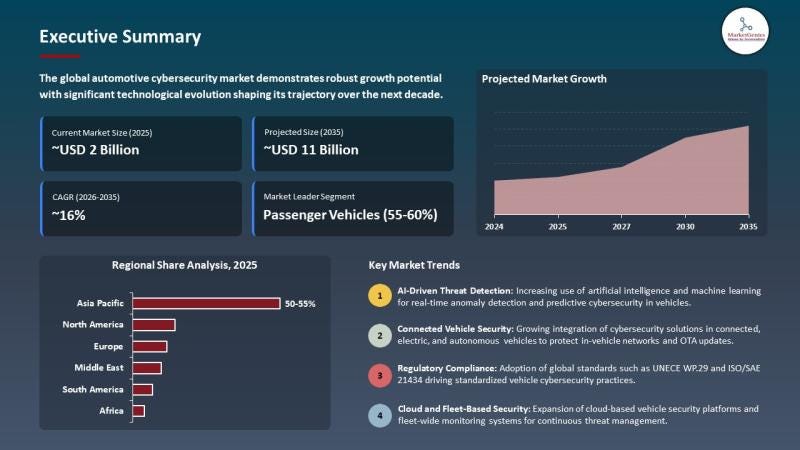
Automotive Cybersecurity Market Set to Surge
A new report projects the automotive cybersecurity market will reach $10.6B by 2035, driven by expanding connectivity and attack surfaces. Security is now a core SDV investment area-not just compliance.
📅 Upcoming Events
ACT Expo - Las Vegas
May 4–7, 2026
One of the largest gatherings in advanced commercial transportation, ACT Expo will feature leaders from Rivian, Mack Trucks, and across the fleet ecosystem-spotlighting electrification, connected fleet platforms, and SDV adoption in commercial vehicles.
Enhanced Safety of Vehicles (ESV) Conference - Toronto
May 12–15, 2026
Global leaders will focus on safety frameworks as SDVs and autonomy reshape vehicle risk models.
SEMA Garage Cybersecurity Workshop - Detroit
May 21, 2026
A focused session led by DG Technologies on evolving vehicle cybersecurity standards, diagnostics, and compliance-critical as regulatory pressure increases across connected vehicle systems.
👋 That’s a Wrap
This week’s signal is decisive:
Connected services are becoming structured revenue platforms
SDV stacks are pre-integrated and production-ready
Autonomy progress remains gated by real-world reliability
The industry is moving past building the stack.
Now it’s about owning the customer-and monetizing the lifecycle.
- The SDV Insider Crew 🚗💨